
Overview
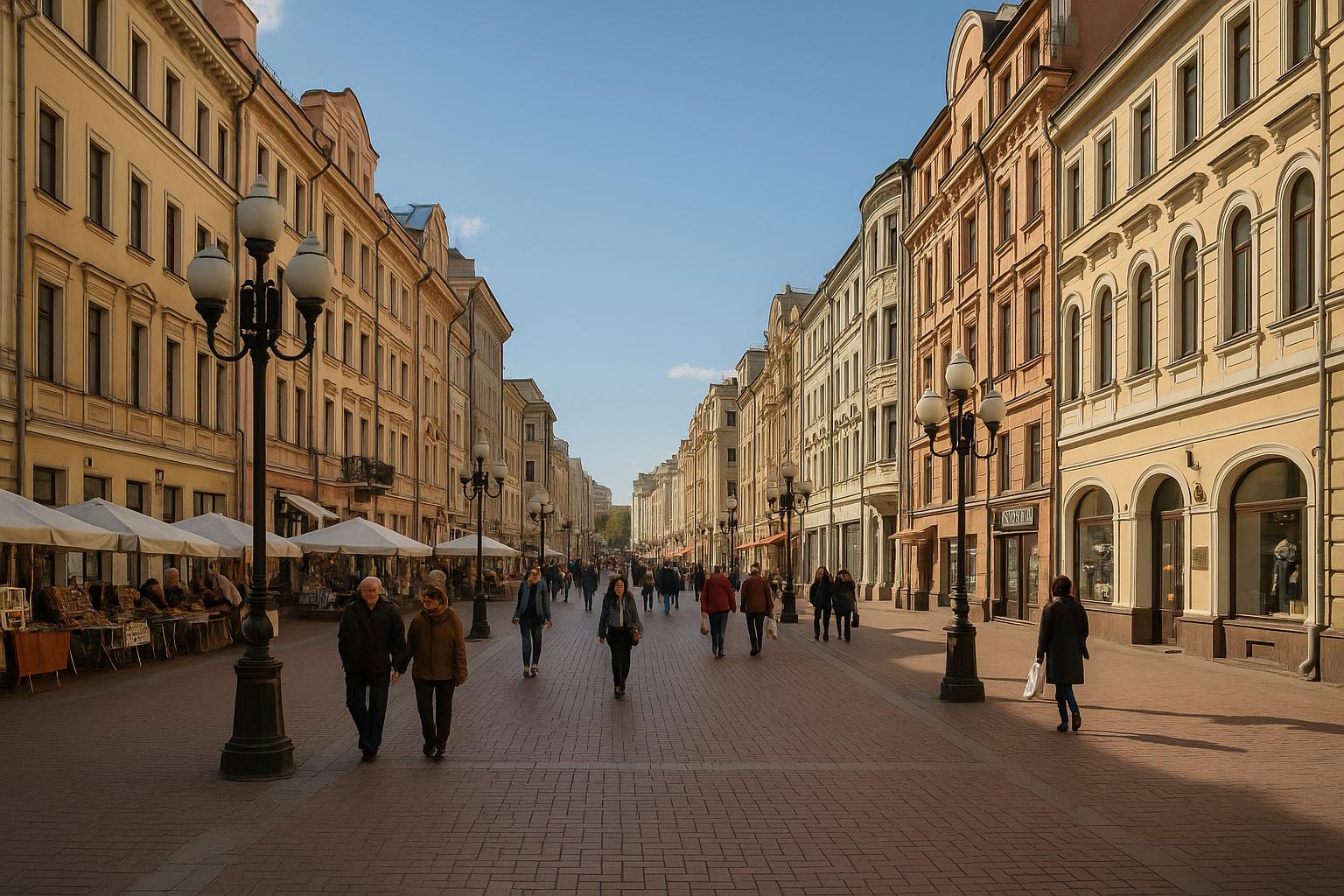
Arbat Street, affectionately referred to as the Arbat (Арбат in Russian), stands as one of the most iconic pedestrian thoroughfares in the heart of Moscow, Russia. Renowned for its cultural and historical significance, the street acts as a magnet for both local residents and international visitors. Serving as an integral part of Moscow’s bustling urban landscape for over half a millennium, Arbat Street offers an intriguing amalgamation of historic charm and modern attractions, inviting everyone who traverses its path to experience its unique ambiance.
Location
With a prime location right in the center of Moscow, Arbat Street spans approximately 1 kilometer in length. It embarks on its journey from the eastern end at Arbatskaya Square and gracefully extends westward to culminate at Smolenskaya Square. Running parallel to the New Arbat Avenue, another major arterial road in the city, Arbat Street is positioned amid the hustle and bustle of one of the world’s most vibrant cities, rendering it an unmissable destination on any visitor’s itinerary.
Historical Background
Delving into the depths of history, the origins of Arbat Street can be traced back to the latter part of the 15th century. Initially, it served as the dwelling place and workplace for a community of craftsmen and traders, marking it as a vital center for commerce and craftsmanship in its early days. As centuries passed, Arbat Street underwent a notable transformation to become a prestigious residential and commercial district. The area gained prominence during the Soviet era when it emerged as a hub for the elite of the arts community, drawing distinguished artists, musicians, and intellectuals. In the present day, this historic street has embraced its identity as a pedestrian-only area, animated by entertainment and shopping, appealing to a diverse cross-section of people.
Cultural Significance
The cultural resonance of Arbat Street is evident in its frequent appearances in Russian literature and music, underscoring its importance as a cultural and artistic icon. Eminent Russian poets and authors, such as the illustrious Alexander Pushkin and celebrated Bulat Okudzhava, have been inextricably linked with the Arbat. Their associations with the street have accentuated its cultural prestige, weaving the street into the cultural tapestry of Russian artistic heritage.
Attractions
Visitors traversing Arbat Street are greeted with a multitude of cultural attractions that grace its length. The street is home to theaters, museums, and stunning architectural landmarks, all of which contribute to its vibrant appeal. Among these noteworthy sites is the Pushkin House Museum, which is dedicated to the life and legacy of the esteemed poet Alexander Pushkin and his beloved wife, Natalia. Enriching the ambiance of the Arbat are an array of street artists and performers who line the thoroughfare, captivating passersby with their talents. This effervescent atmosphere, combined with a generous selection of cafes and charming souvenir shops, positions Arbat Street as an attractive locale for both daytime explorations and leisurely evening strolls.
For those desiring a deeper dive into the offerings of Arbat Street, it is advisable to tap into reputable resources or travel guides. One such recommended source is the Lonely Planet Moscow Guide, which can provide comprehensive insights into everything this iconic street has to offer.
Accessibility
Reaching Arbat Street is an exercise in convenience, thanks to its excellent connectivity via Moscow’s public transportation system. The nearest metro stations, Arbatskaya and Smolenskaya, bestow effortless access to the pedestrian-friendly enclave. Given its central positioning, the Arbat is easily accessible from other prominent landmarks within Moscow, making it a seamless addition to any city exploration itinerary.
In summary, Arbat Street stands today as a harmonious blend of historical depth and contemporary vibrancy. Its enduring appeal continues to serve as a testament to Moscow’s dynamic cultural milieu, showcasing the city’s compelling narrative of evolution while honoring its robust historical roots. Visitors walking along Arbat Street not only trace the footsteps of history but also witness the lively present-day culture of Moscow, rendering it a truly enriching experience.