
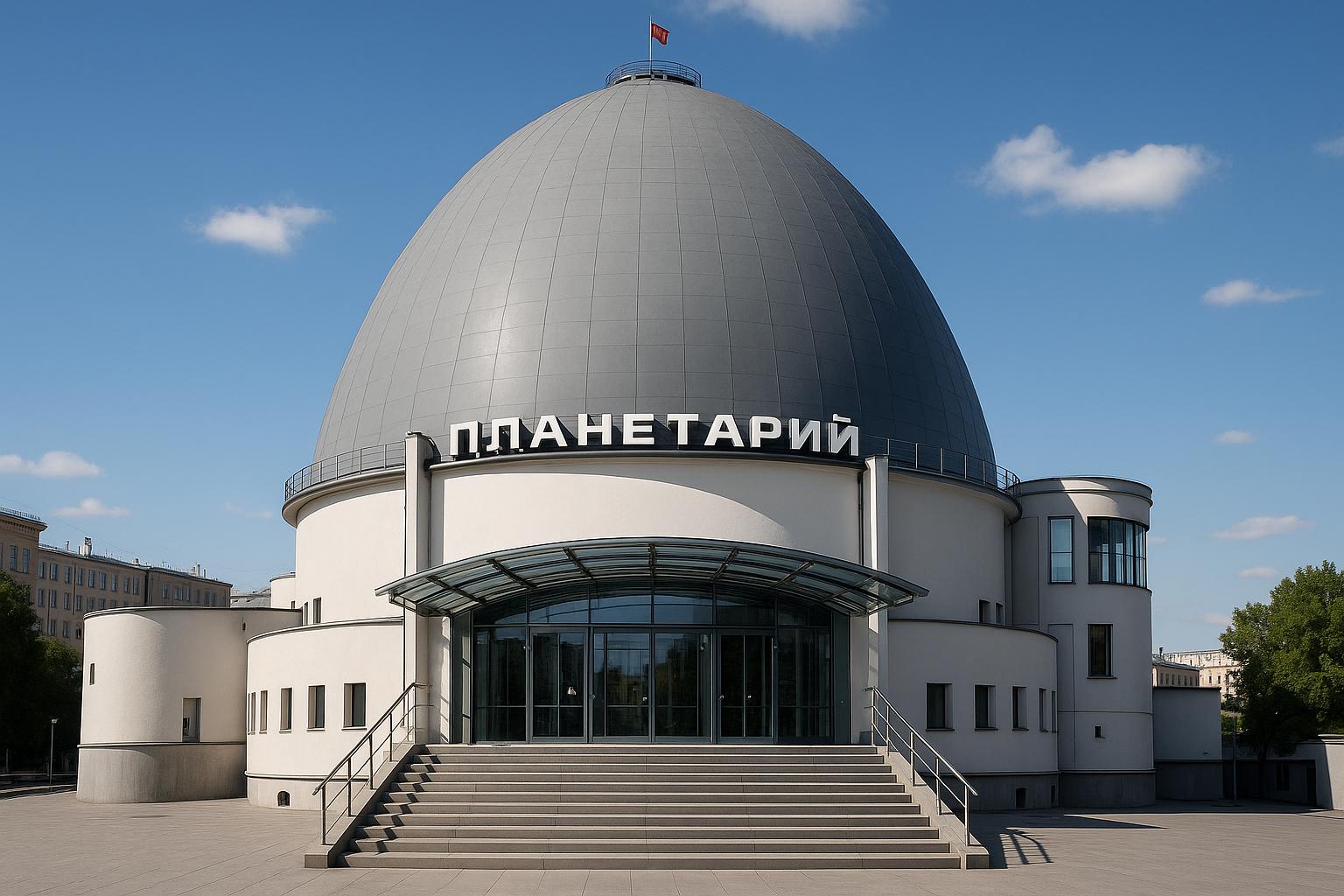
Overview of the Moscow Planetarium
The Moscow Planetarium, situated in the bustling heart of Russia’s capital, stands as one of the most prominent and historic planetariums globally. Since it opened its doors on November 5, 1929, it has established itself as a vital center for both astronomical education and entertainment. The planetarium has not only been a beacon of learning but also an enduring piece of the city’s history, having undergone multiple renovations to keep pace with advancements in astronomical presentation technology.
Architecture and Facilities
The planetary complex is a marvel of architecture, noteworthy not only for its educational offerings but also for its striking physical presence. The most recognizable feature, its hemisphere dome, dominates the skyline, housing an array of facilities engineered to cater to diverse audiences—from young children embarking on their first journey into space science to seasoned astronomers seeking a refined appreciation of celestial phenomena. The central dome remains the centerpiece of the planetarium, acting as the main projection hub. Here, state-of-the-art technology enables the simulation of the cosmos, letting visitors experience the wonder of the universe even amidst the bright lights of Moscow.
Exhibition Zones
The planetarium’s interior is organized into distinct zones, each crafted to highlight a unique aspect of our celestial surroundings. Among these are:
1. The Main Star Hall, which forms the core of the planetarium’s offerings. Here, advanced projection technology provides awe-inspiring shows that bring the night sky to life. This hall is where visitors can immerse themselves in the magic of astronomy, facilitated by presentations that transport them among the stars.
2. The Lunarium, a space dedicated to interactive exhibits that captivate the imagination while delivering information on the solar system and beyond. The Lunarium bridges fun with education, making it a magnificent area for individuals who prefer learning through experience.
3. Urania’s Museum builds a bridge to the past, offering a riveting collection of historical astronomical instruments and meteorites. This museum teaches patrons about the evolution of astronomical study through tangible, historical artifacts that have been preserved and displayed for educational purposes.
4. The Interactive Park for Children is a must-see for families with young astronomers. It offers a range of exhibits designed specifically for youthful curiosity and engagement, ensuring the next generation’s budding interest in space and science is cultivated from an early age.
Telescope Observations
Part of the planetarium’s allure is the opportunity it provides for observing celestial bodies firsthand. The planetarium features strategic platforms equipped with telescopes, where guided observation sessions allow participants to view planets, stars, and other astronomical entities. These sessions help foster a practical understanding of our universe and its numerous celestial inhabitants.
Educational Programs
Education is a cornerstone of the Moscow Planetarium’s mission, reflected in its extensive range of programs and workshops developed for a variety of audiences. Whether you’re a seasoned space enthusiast or a newcomer to the wonders of the cosmos, the planetarium’s educational initiatives aim to incite curiosity, raise scientific literacy, and impart a solid understanding of astronomical concepts.
Public Lectures and Courses
The planetarium hosts regular public lectures and specialized courses that explore a myriad of astronomical subjects. These sessions, crafted and led by experienced astronomers and educators, cover everything from the foundational art of star identification to advanced discussions of complex astrophysical phenomena. This not only ensures that participants receive a fulfilling educational experience but also that they have access to cutting-edge astronomical knowledge.
School and Group Visits
The planetarium is a favored destination for educational field trips, providing expertly curated experiences that align with various educational requirements. School and group visits at the facility typically encompass structured tours, vibrant interactive exhibits, and guided shows adapted to educational frameworks, delivering a comprehensive learning experience for students and teachers alike.
Visiting Information
Occupying a prominent location in Moscow, the planetarium is readily accessible via public transport. Tickets can be conveniently purchased both online and on-site, providing flexibility in planning a visit. The planetarium continually updates its offerings, with current information on show schedules, special events, and fresh exhibits readily available through its official platform. It is advisable for potential visitors to plan ahead, making use of these resources to ensure their visit is not only enlightening but immensely enriching.
For a deeper exploration into visiting hours, specific programs, and current exhibitions, you are welcome to visit the official website of the Moscow Planetarium. Here, you can find detailed insights and updates to enhance your upcoming visit to this iconic establishment.
Conclusion
The Moscow Planetarium transcends its role as just a scientific institution. It serves as a bridge connecting generations, spreading knowledge about the universe while nurturing a passion for discovery and science among its visitors. Whether you are a local resident or a traveler from afar, the planetarium invites you to embark on a journey through space and time, utilizing its historic facilities and modern technological advancements as your guide. Through its educational programs and interactive experiences, the Moscow Planetarium continues to foster a community of learners, always reaching toward the stars.