
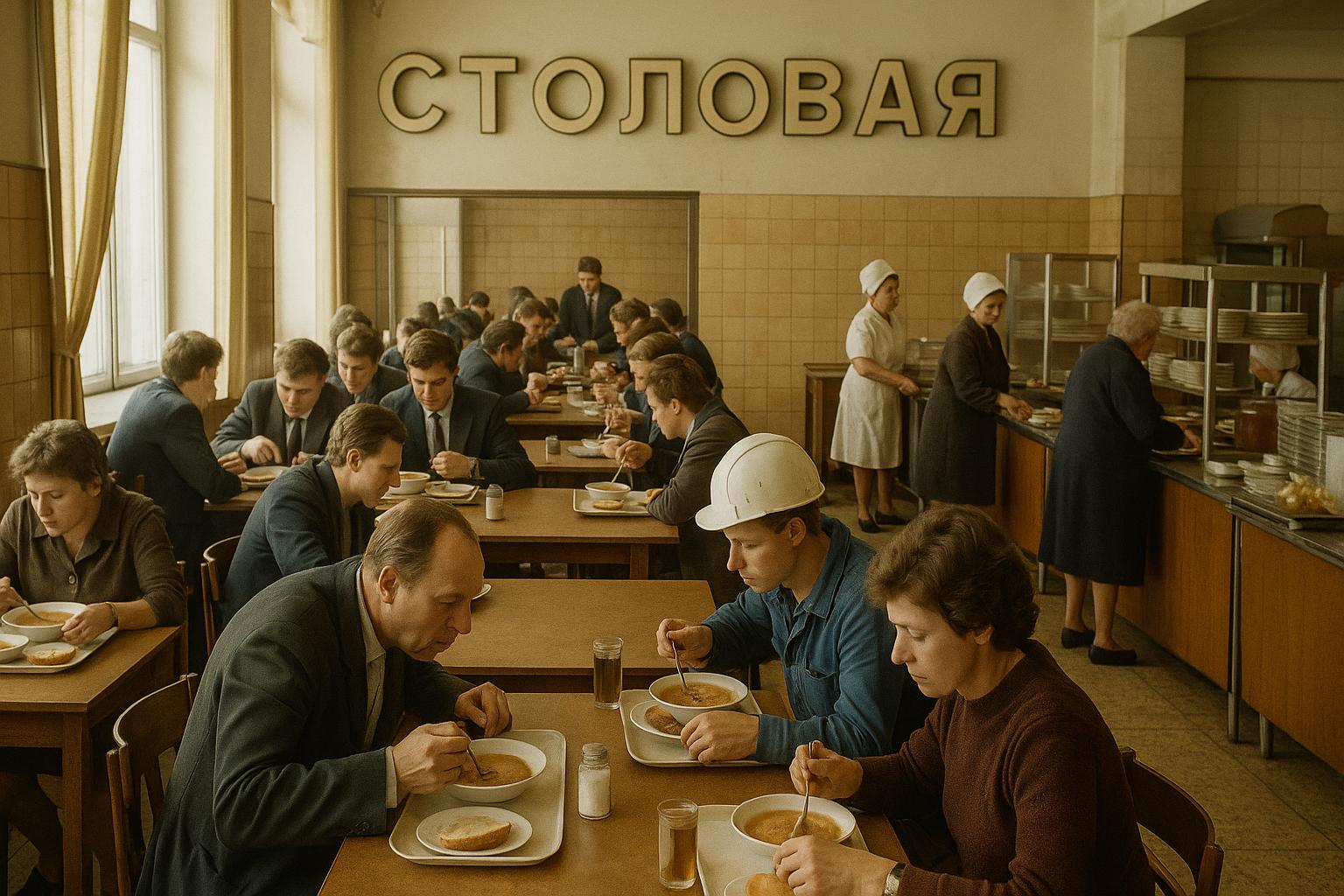
Introduction to Soviet-Era Canteens (Stolovaya) in Moscow
The Soviet-era canteens, commonly referred to as stolovaya, represent a distinctive component of Russia’s gastronomic and cultural identity. Originating in the early 20th century, these canteens underwent significant transformation across different decades, ultimately establishing themselves as communal dining establishments. Primarily catering to workers and students, stolovaya became synonymous with delicious and budget-friendly meals served in a communal setting.
Historical Background
The inception of stolovaya roots back to practical needs during the Soviet era. The establishment of these canteens was motivated by the requirement to provide swift and nutritious meals at a minimal cost, thereby enhancing productivity and ensuring the well-being of the populace. The Soviet state subsidized these canteens extensively, acknowledging their pivotal role in the everyday lives of its citizens. By the 1950s, a robust network of stolovaya had proliferated throughout Moscow and extended into other urban areas.
Culinary Offerings
Even amidst significant economic constraints that characterized the period, these canteens managed to present a surprisingly varied menu. Patrons could typically opt for a selection of dishes such as borscht (a traditional beet soup), pelmeni (filled dumplings), and kotlety (a type of meat patties). Frequently, the meals were complemented by a side serving of potatoes or seasonal vegetables and accompanied by a beverage known as kompot, a fruit-based drink. The straightforward nature of the food offerings mirrored the era’s emphasis on practicality, nourishment, and resourcefulness.
Cultural Significance
Apart from their essential function of providing meals, stolovaya also held the status of social centers. They were venues where individuals from diverse sectors of society—be it factory workers, students, or government office workers—interacted seamlessly. The canteens are emblematic of the Soviet society’s principles of equality, where access to identical services and products was deemed a reflection of egalitarian values.
Remnants in Modern Moscow
The dissolution of the Soviet Union marked the gradual decline of traditional stolovaya. However, several continue to operate in present-day Moscow, offering a portal into the city’s historical and culinary heritage. These establishments draw nostalgic locals as well as inquisitive tourists, all eager to savor an authentic Soviet dining atmosphere. For those inclined to delve into these historical vestiges, visiting these canteens allows for a rare opportunity to sample traditional Russian cuisine while gaining insight into a crucial aspect of the societal framework of the erstwhile Soviet Union.
Exploring Soviet-era canteens can be further enriched by perusing dedicated blogs or travel guides that focus on Moscow’s historical dining venues. These resources provide comprehensive insights and detailed recommendations for anyone interested in an authentic dining experience nestled in history and tradition. Additionally, they shed light on the metamorphosis of these establishments over time, offering a broader understanding of their place in contemporary Russian culture.
The Role of Stolovaya in Soviet Society
The establishment of stolovaya was more than just a nutritional initiative; it represented a strategic move to underpin the societal constructs of the Soviet Union. These dining establishments were designed to promote communal living and foster collective engagement, essential aspects for the social fabric during that era.
A Focus on Collectivism
During the Soviet period, collectivism was a central theme in public and private life. The design and function of stolovaya strongly reflected this ethos. By encouraging a collective dining experience, these canteens reinforced the concept of community above the individual, simultaneously nurturing social bonds and promoting a standardized lifestyle among disparate social classes.
Economic Implications
The economic model of stolovaya played a critical role in maintaining an equitable society. With state-subsidized meals, the canteens were able to provide affordable food options, which was particularly crucial during times of economic hardship or food shortages. This initiative not only relieved financial pressure on individuals but also helped stabilize the economy by ensuring that the workforce remained fed and efficient.
Nutritional Policies
The menu across different stolovaya was meticulously designed to meet nutritional policies laid down by the state. By offering a balanced diet rich in necessary nutrients, these canteens aimed to improve public health systematically. Efforts were streamlined to ensure that while the menu remained simple, it was wholesome enough to meet the dietary needs of various demographic groups.
A Place for Exchange of Ideas
Moreover, stolovaya served as informal centers for exchange of ideas. Intellectuals, artists, and ordinary citizens would often congregate in these canteens, making them lively hubs of discussion and debate. The accessibility and openness of such spaces allowed for the free flow of thoughts and the evolution of ideas, contributing to a dynamic intellectual atmosphere within the constraints of the Soviet ideological framework.
As we move further away in time from the Soviet era, retaining a connection to places like stolovaya is invaluable. They remind us of a complex period in Russian history, offering lessons on the significance of cultural and social practices that transcend mere eating. For anyone wishing to understand Russia’s journey from its Soviet past to its present, an exploration of stolovaya provides a fascinating narrative. Through these canteens, one can observe the interplay of social policies, economic strategies, and cultural dynamics that have shaped modern Russian society.
In summary, Soviet-era canteens embody a multi-faceted legacy of tradition, societal interaction, and historical evolution. The humble stolovaya stands as a testament to a bygone era, offering insights that remain relevant to ongoing discussions about culture, politics, and social engagement in Russia today. For more comprehensive coverage of historical dining establishments in Moscow, one can explore numerous travel blogs or historical guides online, which provide in-depth narratives and vibrant anecdotes about these intriguing culinary landmarks.