
Moscow’s Architectural Crossings: A Journey Through Its Bridges
Moscow, the vibrant heart of Russia, is a city with a fascinating tapestry of architecture, a significant part of which consists of the many bridges that weave its districts together across its numerous rivers and canals. Each of these bridges carries a unique story, reflecting Moscow’s growth and various transformations over the centuries. Bridges in Moscow are not just functional infrastructure; they are icons of architectural innovation and historical significance, offering a window into the city’s evolution, from its early days through industrial expansions to modern-day marvels.
The Birth of Moscow’s Bridges
The earliest records of bridge construction in Moscow date back to the 15th century. The construction of the first wooden bridge over the Moskva River marked a pivotal moment in the city’s history. This bridge was strategically placed to connect the fortified center of the Kremlin with the Zamoskvorechye District, hinting at an early stage of urban expansion. At this time, Moscow was gaining prominence, and the creation of such infrastructure was crucial for facilitating trade, movement, and communication between key areas of the growing city.
19th Century Advancements
As Moscow entered the 19th century, it witnessed an industrial boom that catalyzed the need for a more robust and strategic transportation infrastructure. The transition from wooden bridges to those made of iron and steel came as a necessity to handle heavier loads and endure the extremes of Russian weather. These advancements were integral in supporting Moscow’s rapid industrial growth, allowing for the expansion of trade routes and enhancing connectivity within the city.
Krymsky Bridge
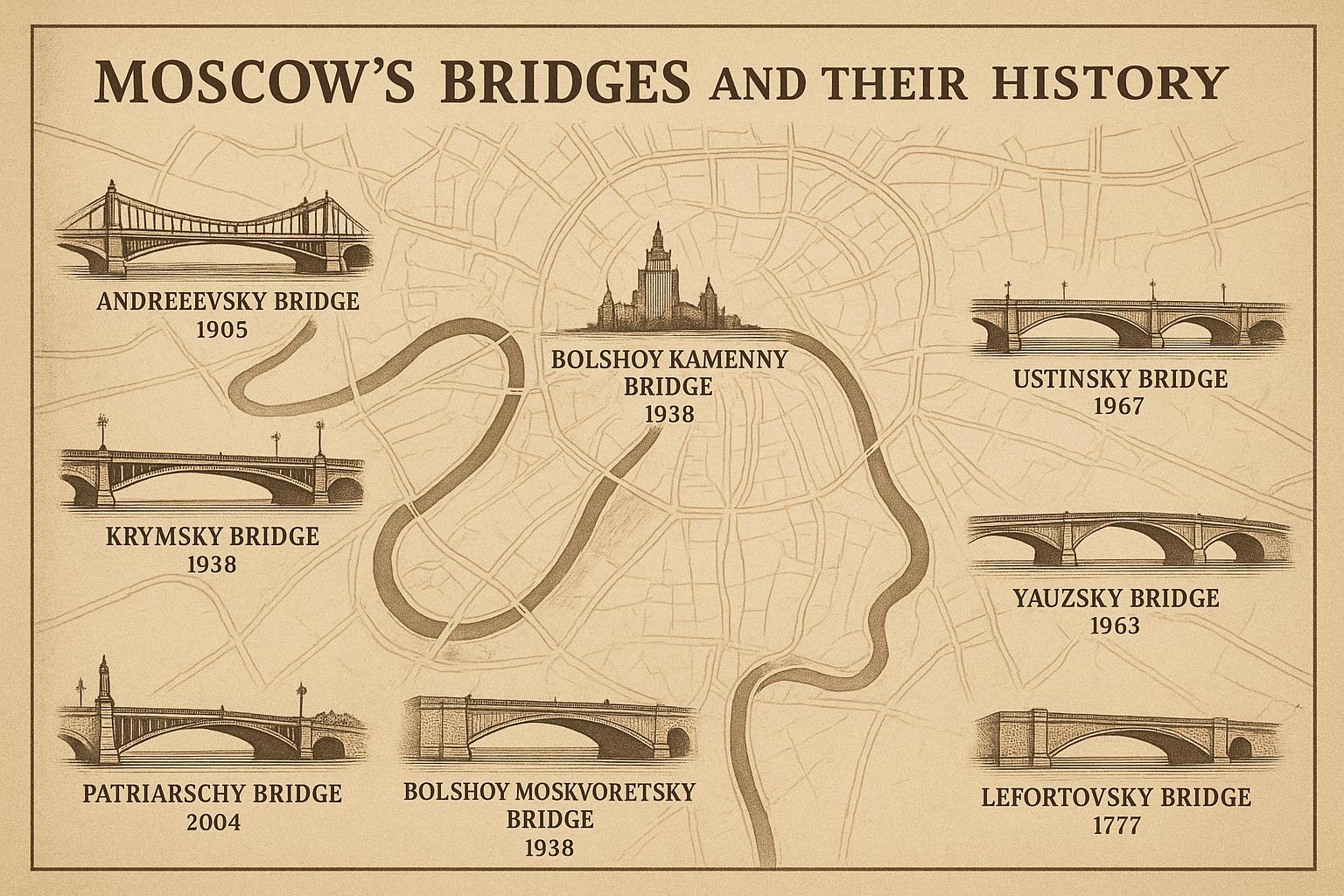
The original Krymsky Bridge stands as a testament to the era’s engineering achievements. Initially constructed from wood in 1786, it underwent transformation into a steel structure by the early 20th century. Now recognized for its suspension design, the Krymsky Bridge is unparalleled within the context of Moscow’s array of bridges, offering historical insight and a modern architectural perspective.
20th Century Innovations
The Soviet era heralded an era of significant infrastructural projects that showcased the blend of functionality and aesthetic prowess. Bridges constructed during this time reflected a new emphasis on innovation and scale, with designs accommodating both vehicular and pedestrian traffic to cater to the needs of a rapidly urbanizing population.
Bagration Bridge
The Bagration Bridge, completed in 1997, remains a notable example of this blend of function and aesthetics during the later Soviet era. Designed to serve both vehicles and pedestrians, the bridge’s design boasts an elegant structure that offers expansive views of Moscow’s evolving skyline, making it not only a transportation route but also a site for aesthetic appreciation and leisure.
Andreevsky Railway Bridge
The construction of the Andreevsky Railway Bridge from 1905 to 1907 was a pivotal project aimed at improving Moscow’s connectivity with the wider Russian Empire. Blending functional engineering with aesthetic charm, the Andreevsky Bridge was a product of its time, representing the engineering advancements and architectural trends of the period while enhancing the city’s transport network.
Post-Soviet Bridges
Post-Soviet Moscow continued to pursue architectural innovation in bridge construction. The Vostochny Bridge, completed in the early 2000s, is illustrative of the post-Soviet design ethos, which favored sleek and modern aesthetics. Built to meet practical needs while also serving as a symbol of contemporary architectural achievements, this bridge reflects the continuous evolution of Moscow’s infrastructural landscape.
Maintaining Historical Perspectives
While Moscow expands and modernizes, the preservation of its historical bridges remains crucial. Urban planners and historians emphasize regular maintenance and careful restoration, recognizing these structures as both functional necessities and invaluable cultural landmarks. This approach ensures that Moscow’s bridges, with their rich histories, continue to be tangible symbols of the city’s storied past and dynamic future.
Conclusion
Spanning Moscow’s waterways, its bridges are far more than mere physical connectors. They are lasting symbols of the city’s heritage and markers of technological evolution. For those interested in exploring the essence of Moscow, taking a walk across these bridges is recommended. Each step offers a unique vantage point from which to appreciate the multifaceted and ever-evolving cityscape, offering insights into the layered history of this fascinating metropolis. As one traverses these architectural crossings, they not only bridge the gaps between Moscow’s districts but also connect the past with the present, continuously weaving the rich narrative of this vibrant city.