
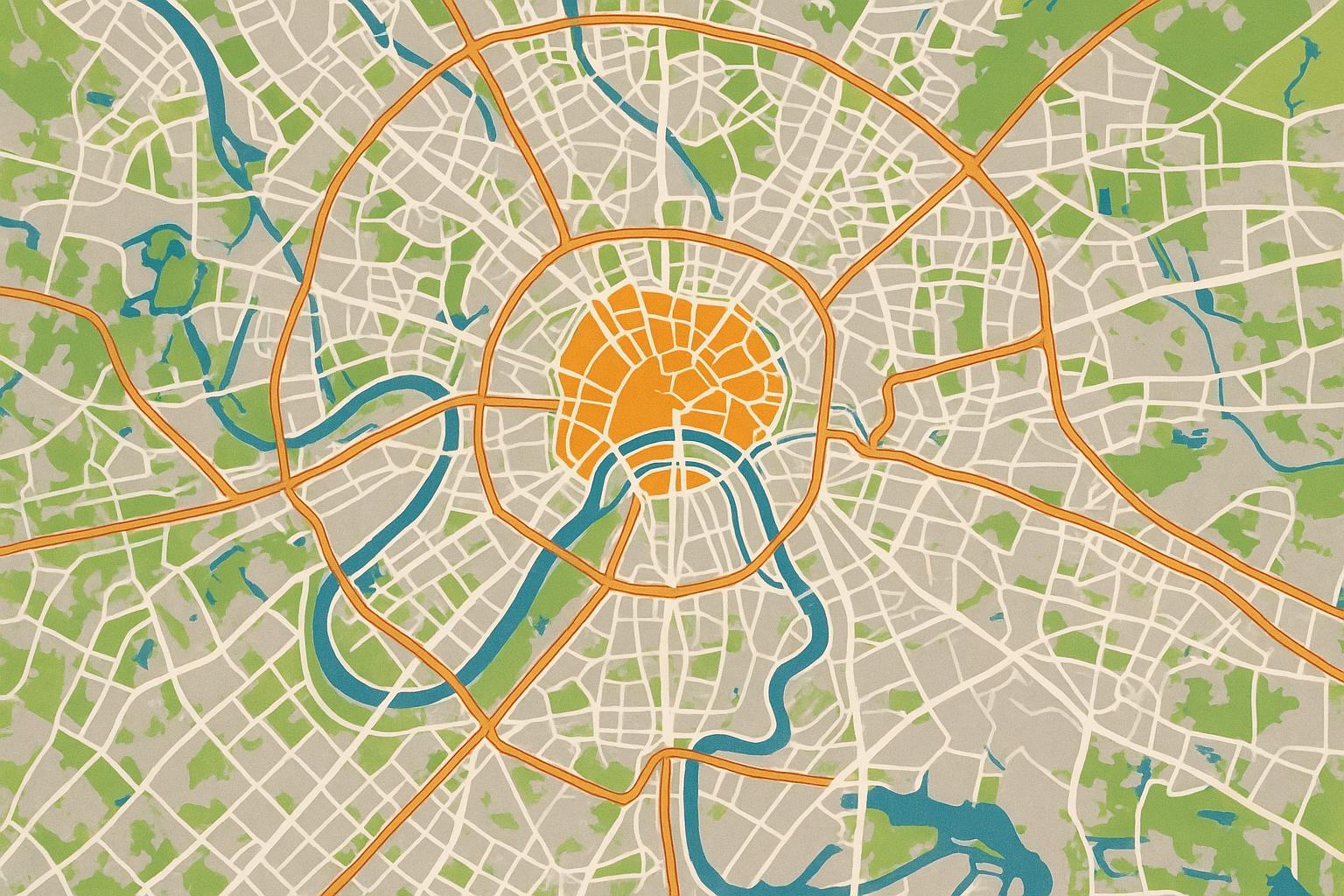
Moscow’s Ring Roads: An Overview
Moscow, the capital of Russia, is a metropolis that intricately weaves its rich historical past with modern urban planning. In the city’s resilient infrastructure, the ring roads stand out as significant features, serving as crucial components that not only influence traffic dynamics but also impact urban development strategies. To fully appreciate the essence of Moscow’s growth and planning, an understanding of these ring roads is crucial in comprehending their broader implications on transportation, logistics, and everyday life within the city.
The Historical Ring: The Garden Ring
The Garden Ring, also locally known as the Sadovoye Koltso, marks the oldest of Moscow’s ring roads. This road has a deep-rooted historical significance, having once demarcated the city’s boundaries during the 18th century. As Moscow expanded, the Garden Ring found itself closer to the bustling city center, symbolizing the merging of Moscow’s rich history with its dynamic present. The origin of its name is tied to the gardens that replaced the city’s old fortifications, setting a precedent for blending natural beauty with urban function.
In its current form, the Garden Ring serves as a major artery within the city, integrating bustling residential areas and thriving commercial districts. It encapsulates the vibrant spirit of Moscow, reflecting the seamless transition from historic landmarks to modern urban life. The Garden Ring is a living testament to Moscow’s ability to grow while still maintaining a connection to its past, embodying the significance of thoughtful urban planning.
Repairing Post-Soviet Growth: The Third Ring Road
The Third Ring Road holds a vital place in the framework of Moscow’s road network, representing its remarkable developments during the late 20th century. Built during a time of profound change following the dissolution of the Soviet Union, this road was essential in addressing the challenges posed by rapid urban expansion. Extending approximately 35 kilometers, the Third Ring Road is designed to ease traffic congestion, linking crucial areas across the city and enhancing accessibility between central and peripheral districts.
This development was instrumental in managing the increasing volume of intra-city traffic, demonstrating a proactive approach to urban problem-solving. By introducing this new layer to Moscow’s infrastructure, city planners were able to facilitate better traffic flow while preparing the city for further growth in the post-Soviet era. The looming traffic challenges of an expanding metropolis found relief through the strategic implementation of the Third Ring Road.
The New Arteries: The Fourth Ring
Venturing into a forward-thinking era, the Fourth Ring, or the Fourth Transport Ring, represents a bold step towards preparing Moscow for future urban expansion. Unlike its predecessors, the development of the Fourth Ring demonstrates a shift from reactive solutions to proactive urban planning. Although still under construction, the Fourth Ring is designed to decentralize Moscow’s dense urban core, encouraging growth in the city’s outskirts and mitigating potential bottlenecks.
By fostering development in outlying areas, the Fourth Ring plays a pivotal role in managing urban sprawl and potential congestion. This proactive approach highlights Moscow’s commitment to strategic urban planning, anticipating the needs of a growing metropolis and ensuring sustainable development. The Fourth Ring is a testament to Moscow’s vision of a cohesive urban structure that facilitates orderly expansion while minimizing potential obstacles.
Moscow’s Largest Project: The Moscow Central Circle
The Moscow Central Circle (MCC) stands out as a unique and innovative component of Moscow’s ring-road system. Completed in 2016, this project integrates both a highway and a rapid transit railway, expanding the functionality and reach of Moscow’s transportation network. Although it differs from traditional ring roads, the MCC serves as a vital link within the city’s transportation infrastructure, offering a viable alternative to roads susceptible to heavy congestion.
By connecting various metro lines, the Moscow Central Circle facilitates seamless travel across diverse modes of transportation, bridging surface and underground transit systems. The integration of the MCC into Moscow’s infrastructure provides enhanced connectivity and reliability, reinforcing the overall efficacy of the city’s transport network. This creative approach showcases the potential of multi-modal transport solutions in the face of ever-growing urban challenges.
Urban Planning and the Future of Moscow’s Infrastructure
At its core, Moscow’s ring roads serve far beyond their fundamental purpose as traffic conduits; they represent the meticulously planned evolution of the city’s infrastructure. By balancing the goal of preserving Moscow’s historical heritage with the imperative of meeting modern demands, these roads embody the dynamic nature of urban planning in a historical city. These intricate networks reflect the city planners’ foresight, shaping Moscow’s growth and supporting a thriving population and economy.
Looking forward, continued advancements and expansions of this network will be indispensable in ensuring that Moscow can meet the challenges posed by an increasing population and economic activities. Continuous innovations within this infrastructure framework will be essential in maintaining efficient transport systems while fostering sustainable urban growth. Exploring such infrastructural developments offers valuable insights into the principles and execution of urban planning in historically significant cities like Moscow.
For those interested in further understanding urban planning and infrastructure development, Moscow’s ring roads provide a compelling case study worth exploring. Information on similar infrastructure endeavors can be accessed through a range of governmental portals and urban planning forums available online, each offering diverse perspectives on the intricacies of successful city planning.