
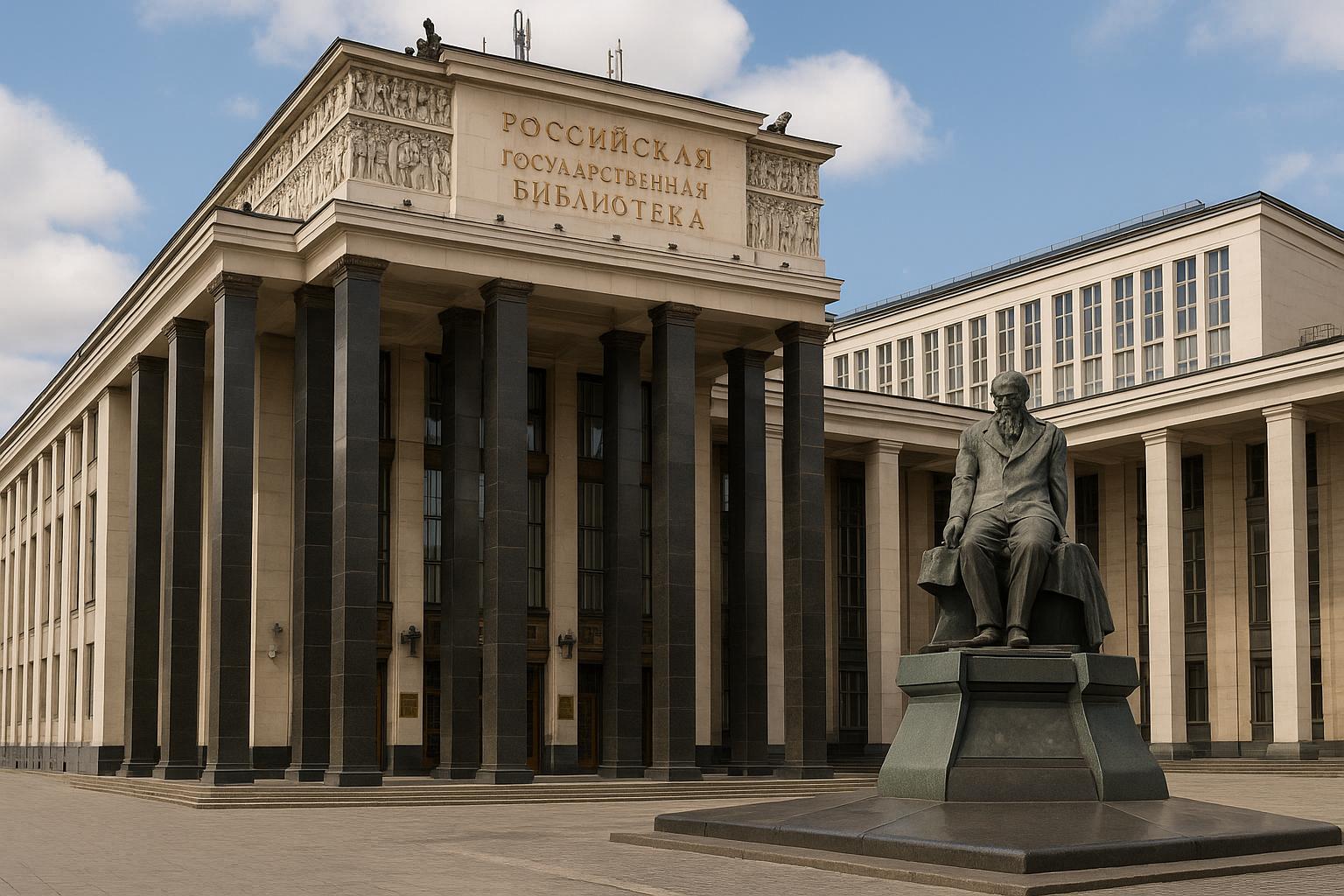
The Russian State Library: An Overview
The Russian State Library, based in Moscow, stands as one of the largest libraries globally. Acting not just as a vast repository of knowledge, it also holds a significant place as a cultural institution within Russia. Since its inception in 1862, this library has accumulated a rich historical narrative and remains an invaluable resource for researchers and scholars worldwide.
Historical Background
The roots of the Russian State Library can be traced to the founding days of the Moscow Public Library. Established in a period of cultural optimism, it rapidly evolved through various phases to become the present-day Russian State Library. During the time of the Soviet Union, its name was altered to the V. I. Lenin State Library of the USSR, mirroring the era’s political climate. The library received its current designation following the dissolution of the Soviet Union, marking a new chapter in its storied history. This transformation highlights the library’s enduring relevance and adaptability through the changing socio-political landscapes of Russia.
Collection and Resources
The Russian State Library holds an impressive collection that exceeds 47 million items. This vast collection encompasses a diverse array of materials including books, periodicals, maps, music scores, dissertations, and rare manuscripts. Such an extensive repository caters to a wide range of scholarly needs. Noteworthy is the inclusion of literary works and documents in various languages, underscoring the library’s international importance. This expansive breadth of collections makes it a critical resource for global researchers and students, offering insights into myriad subjects and disciplines. The presence of rare manuscripts and first editions further enriches its value for historians and literary aficionados.
Accessibility and Digital Efforts
In response to the advancements of the digital age and the accompanying shift in information consumption habits, the Russian State Library has undertaken significant endeavors to enhance accessibility. While maintaining its traditional library services, which remain vital for many researchers, an expansive digital catalog has been developed. This digital transformation facilitates global access to the library’s resources, allowing individuals worldwide to engage with its collections remotely. Additionally, the digitization process aids in the preservation of fragile and rare documents, ensuring their longevity for future generations of researchers. Those interested can explore these digital resources by visiting the official website of the Russian State Library.
Cultural and Educational Role
Beyond serving merely as a reservoir of written works, the Russian State Library plays a pivotal role in cultural and educational domains. It regularly hosts a variety of exhibitions, lectures, and events aimed at promoting cultural exchange and intellectual growth. These activities foster an environment of learning and are instrumental in bringing together diverse groups to engage in dialogue and exchange ideas. Furthermore, the library actively collaborates with international institutions, participating in academic research projects and contributing to scholarly development worldwide. This collaborative spirit enhances the global standing of the Russian State Library and underscores its commitment to fostering international understanding and cooperation.
The Architecture and Physical Space
The architectural design of the Russian State Library complex reflects the stature and importance of the institution. Over the decades, additions and renovations have shaped the library’s physical presence. The main building, with its impressive structure, serves as a landmark in Moscow. It combines both classical and modern architectural elements, symbolizing a bridge between the past and the present. The interiors are designed to accommodate millions of visitors each year, offering spaces conducive to reading, research, and reflection.
The library comprises numerous reading halls, each tailored to different subjects and research needs. These halls are equipped with comfortable seating and advanced facilities to support both individual and group study sessions. Special collections are housed in secure areas to ensure their preservation, granting access to researchers with specific needs. A visit to the Russian State Library not only offers access to its vast resources but also an experience of architectural grandeur and historic significance.
Contributions to Global Scholarship
The Russian State Library’s impact extends far beyond the borders of Russia, contributing to global scholarship in multiple ways. It serves as a depository of Russian and Slavic literature, providing crucial resources for researchers around the world. Additionally, the library’s collaborative efforts with international organizations help in cross-border research initiatives, promoting scholarly exchanges that enhance the quality and breadth of research across various disciplines.
The library’s participation in international consortiums and partnerships allows for the sharing of resources, methodologies, and best practices. Such collaborations improve access to Russian literary and historical documents, bridging gaps between Eastern and Western scholarly communities. Scholars often rely on the library’s comprehensive collections for studies in history, literature, art, and other fields, highlighting its role as a linchpin in worldwide academic research.
Visitors and Public Engagement
The Russian State Library attracts millions of visitors annually, ranging from academics and students to tourists and local residents. Its programs aim to engage the public effectively, demonstrating the value of libraries in contemporary culture. Special exhibits often focus on historical events, prominent figures, and cultural milestones, drawing connections between past and present narratives.
Educational programs are tailored to different age groups, fostering early interest in literacy and lifelong learning. Workshops and seminars conducted on various themes offer platforms for discussion, enabling visitors to delve deeper into topics of interest. These initiatives ensure that the library remains not just a silent repository but an active participant in societal education and cultural conversation.
Future Directions and Innovations
As it moves forward, the Russian State Library continues to pursue innovation in library science and management. Efforts toward expanding digital archives and improving online interfaces are ongoing, with the objective of enriching user experience. Key focus areas include enhancing digital literacy among users and integrating advanced technologies such as artificial intelligence to aid in resource management and retrieval.
Future plans also include expanding partnerships with educational institutions and cultural organizations globally. These partnerships aim to promote diversification of the library’s collections and increase outreach to broader audiences. By continuing to evolve and adapt, the Russian State Library ensures its role as a dynamic cultural and research institution, poised to meet the challenges and opportunities of the future.
In summary, the Russian State Library remains an indispensable component of Russia’s cultural and intellectual ecosystem. Through its expansive collections, cultural activities, and embrace of modern technologies, it plays a vital role in preserving knowledge and promoting educational exchanges both within Russia and internationally.