
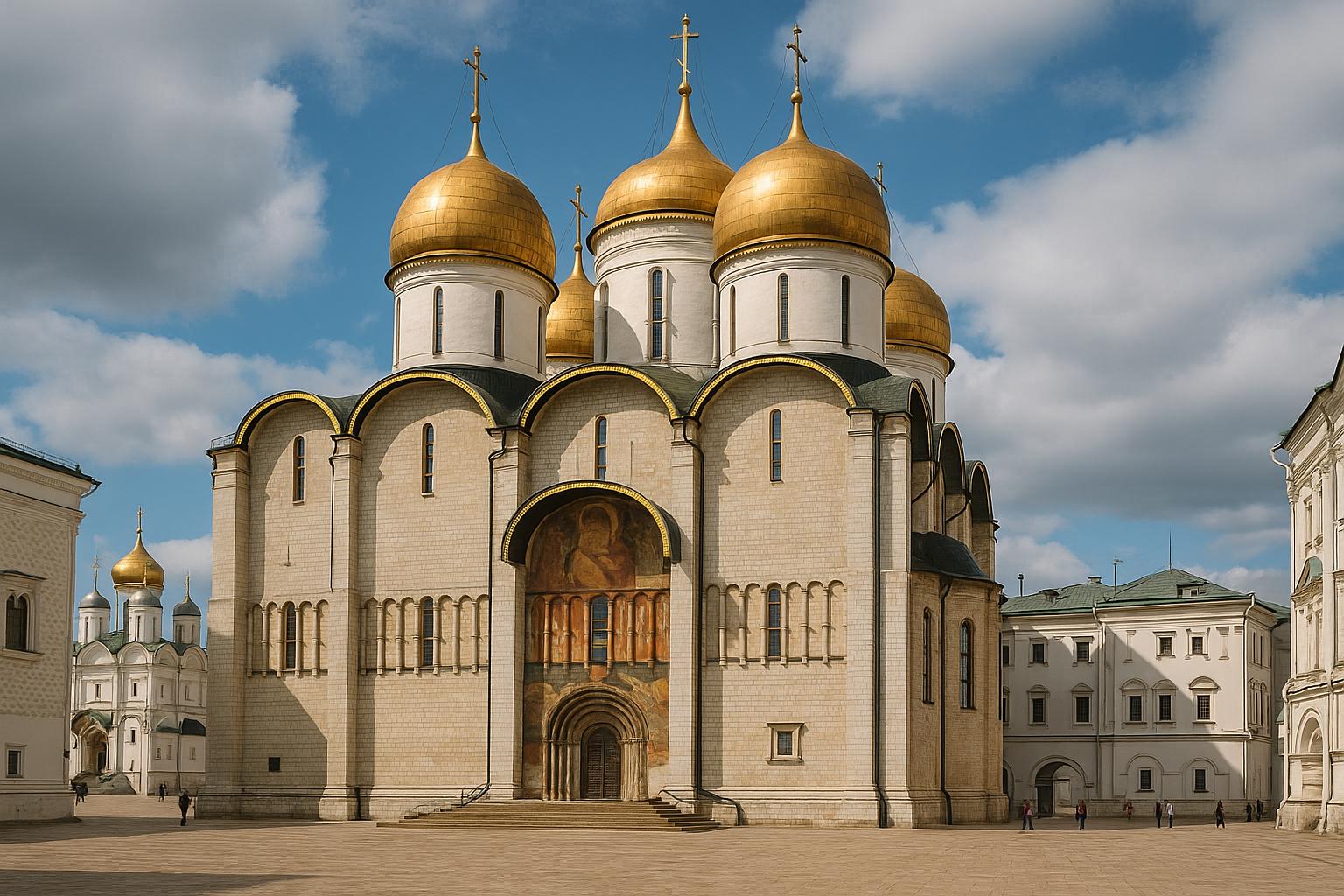
The Architectural Significance of the Assumption Cathedral
The Assumption Cathedral, nestled within the historic Kremlin in Moscow, represents a quintessential example of Russian Orthodox ecclesiastical architecture. This prominent structure is not only a spiritual beacon but also a testament to the architectural ingenuity of its time.
Historical Context
Construction of the Assumption Cathedral commenced in 1475 at the behest of Grand Duke Ivan III. This era was characterized by a significant effort towards the reunification of the fragmented Russian territories. The vision for the Cathedral was to establish a spiritual epicenter for the expanding dominion. To fulfill this vision, Italian architect Aristotle Fioravanti was brought on board, thus blending traditional Russian architectural styles with Renaissance influences, marking a significant evolution in the architectural landscape of Russia.
Design and Features
The Assumption Cathedral stands out for its blend of simplicity and majesty. Architecturally, it is noteworthy for its quintet of domes, a distinct feature of Russian ecclesiastical designs, symbolizing Jesus Christ at the center and the four evangelists surrounding him. Moving inside the Cathedral, visitors are greeted by an impressive array of frescoes and icons, contributing to the serene and reverent atmosphere within. One of the most striking interior features is its iconostasis, a towering wall filled with icons and religious paintings that demarcates the nave from the sanctuary, further emphasizing the Cathedral’s liturgical significance.
The Role in Russian History
The Assumption Cathedral is deeply enshrined in Russian history, having been the venue for numerous pivotal events over the centuries. Perhaps most notably, it hosted the coronation ceremonies of Russian czars. This tradition began with Ivan the Terrible’s coronation in 1547 and continued until the coronation of the last czar, Nicholas II, in 1896. Hence, the Cathedral has long been entwined with the ceremonial traditions of Russian statehood and monarchy, serving as a physical embodiment of the fusion of church and state powers over the ages.
Present-Day Status
Presently, the Assumption Cathedral is integrated into a larger museum complex while continuing to operate as a sacred religious site. It remains an architectural and spiritual landmark, drawing diverse groups of visitors and researchers eager to explore its rich historical and cultural tapestry. The Cathedral continues to offer tours that provide insights into its historical significance and offer a deeper comprehension of the intertwining of religious and political narratives in Russian history.
In conclusion, the Assumption Cathedral stands as a remarkable illustration of the convergence of art, spirituality, and governance within Russian culture. Its sustained presence within the Kremlin underscores its relevance not only as a place of worship but also as a monument of historical and cultural importance. Through its walls, the stories of centuries have unfolded, making it an enduring symbol of Russia’s rich historical narrative.