
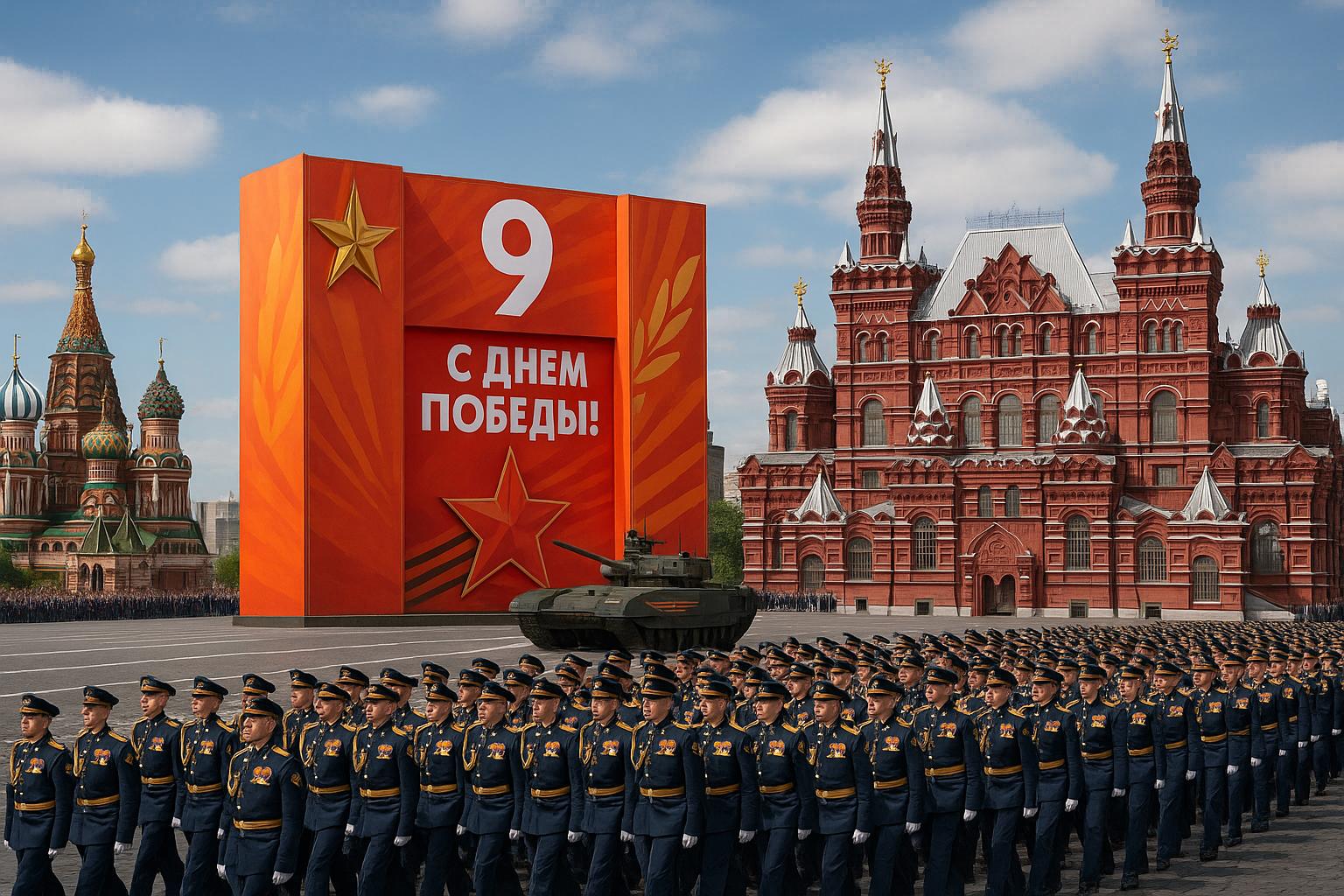
Background of Victory Day Parade
The Victory Day Parade, held annually on May 9, serves as a poignant commemorative event marking the Soviet Union’s triumph over Nazi Germany during World War II. This occasion not only honors military accomplishments but also stands as a testament to the enormous sacrifices made throughout the war. The parade historically showcases military might and symbolizes a united nation’s resilience in overcoming severe adversity.
Historical Significance
Victory Day signifies the formal capitulation of Nazi Germany to Allied forces in 1945, which effectively marked the end of World War II’s European theater. Although this day is predominantly observed in Russia and several Eastern European nations, it underscores the crucial role that the Soviet Union played in the downfall of Nazi Germany. Initially introduced in 1945 at Moscow’s illustrious Red Square, the parade has evolved into an annual tradition since 1965, reflecting a longstanding observance of national history and resilience.
Parade Features
Key to the Victory Day Parade’s spectacle is the display of a diverse array of military hardware, encompassing tanks, missiles, and other advanced defense systems. These elements vividly illustrate Russia’s military capabilities. Military personnel drawn from various branches participate in this grand procession, often accompanied by historical military vehicles and traditional uniforms. This juxtaposition of historical and contemporary military elements highlights the nation’s defensive strength and pays homage to its historical military triumphs.
International Participation
Though the Victory Day Parade primarily serves as a national occasion, it occasionally features international participation. Invitations sometimes extend to representatives from various countries, enhancing diplomatic relations and acknowledging the collaborative effort in overcoming Nazi Germany. Such international involvement serves as a potent reminder of World War II’s enduring global impact and reinforces a shared commitment to maintaining peace and security in the world.
Modern-Day Observations
In the contemporary era, the Victory Day Parade garners a worldwide audience, facilitated by live broadcasts. The integration of modern technologies such as live streaming has made it possible for viewers outside Russia to access and appreciate the event, thereby amplifying its international resonance. This global visibility reinforces the event’s stature as a source of national pride and a platform for collective reflection and recognition of World War II’s historical legacy.
For those interested in further exploration of the event and its historical context, extensive coverage can be found on prominent news platforms including BBC News and CNN.
The Evolution of the Victory Day Parade
Origins and Initial Inception
The origins of the Victory Day Parade can be traced back to the immediate aftermath of World War II. The first parade took place amid the ruins of a Europe seeking recovery. Held in Moscow’s Red Square, it served as a monumental occasion that allowed a war-weary nation to express deep-seated pride in its hard-won victory. The inaugural event was attended by major Soviet political and military figures, with the parade providing a platform to display captured German military equipment, thus symbolizing the defeat of Nazi tyranny.
The Cold War Impact
Throughout the Cold War, the parade evolved into an arena for demonstrating Soviet prowess, both militarily and ideologically. This period saw an emphasis on showcasing the latest innovations in military technology. The parade thus became a vehicle for exerting soft power, as it aimed to project strength and a command of technological advancements to both allies and adversaries.
Post-Soviet Revival
Following the dissolution of the Soviet Union in 1991, the Victory Day Parade underwent significant transformation. Initially, the event was downscaled, reflecting the uncertainties during Russia’s transition period. However, it experienced a revival in the early 2000s, regaining its stature as a significant national event. It symbolized a renewed emphasis on patriotism and national identity, connecting modern-day Russians with their historical past.
Symbolism and Reflection
The parade, beyond its display of military might, offers a rich tapestry of symbolism and historical reflection. Each element, from the sequence of events to the musical compositions performed, is meticulously curated to evoke both memories of past glories and aspirations for future achievements. The symbolism inherent in the parade extends beyond military achievements to encompass a narrative of resilience, unity, and hope.
Global Perception and Reception
International Responses
International responses to the Victory Day Parade are often mixed, reflecting differing political and historical viewpoints. Some nations view the parade as a proud celebration of a pivotal historical moment, recognizing the Soviet Union’s significant contribution to the Allied victory. Others perceive it as a display of militarism, wary of the political undertones that accompany such an overt exhibition of military strength.
Diplomatic Channels
The parade occasionally serves as a venue for diplomatic engagement, with foreign dignitaries invited to participate. This aspect of the event serves dual purposes: fostering diplomatic ties and emphasizing collaborative efforts during World War II. These invitations are often strategic, signifying geopolitical alliances and serving as gestures of goodwill between nations.
Media Coverage and Public Opinion
The global media’s coverage of the Victory Day Parade often focuses on its soaring military displays and the political rhetoric accompanying the events. Public opinion varies, with interpretations often influenced by contemporary geopolitical climates. Nevertheless, the parade’s resonance as an expression of historical memory remains largely undiminished, continuing to evoke discussions on the nature of nationalism and collective memory.
Cultural Reflection and Commemoration
As much a cultural observance as a military one, the Victory Day Parade also facilitates cultural reflection and commemoration. The event’s ceremonial aspects, including the participation of veterans and the laying of wreaths, provide opportunities for collective remembrance. These ceremonial acts resonate across generations, underscoring the enduring legacy of World War II in shaping national and international histories.
For those interested in a deeper understanding of the intricate associations between historical remembrance, military tradition, and modern geopolitical contexts, following platforms such as BBC News and CNN will be beneficial for comprehensive insights into ongoing discussions surrounding the Victory Day Parade.