
Moscow Metro: An Architectural Marvel
The Moscow Metro is not just an efficient public transportation system; it is a living museum representing the rich tapestry of Soviet and Russian architecture. Serving as both a mode of transit and an emblem of historical evolution, the metro reflects the dramatic political and social changes that have shaped Russia over the decades. This article delves into the diverse architectural styles, cultural significance, and modern advancements of the Moscow Metro.
Origins and Development
The Moscow Metro’s origins trace back to the early 1930s. With the Soviet Union in the throes of rapid industrialization, there was an urgent need for a robust public transport system to alleviate urban congestion and symbolically reflect the nation’s progress. In 1935, this vision materialized with the opening of the metro’s first line, stretching 11 kilometers and connecting 13 stations, from Sokolniki to Park Kultury, with a branch extending to Smolenskaya.
Soviet Monumentalism
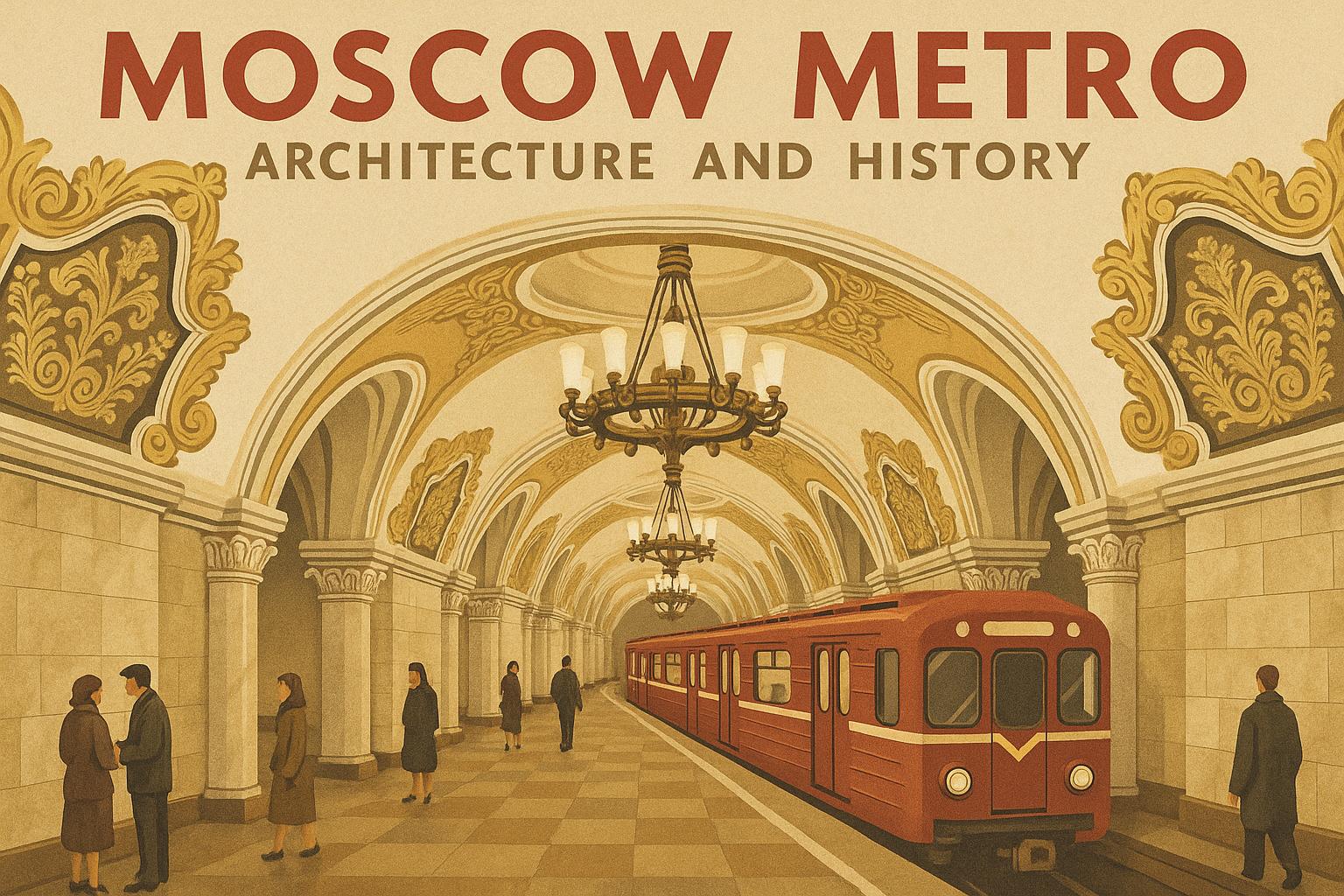
During the Stalin era, the metro stations were designed to be “palaces for the people.” This period is characterized by architectural opulence, with stations featuring *marble walls*, *high ceilings*, *intricate mosaics*, and *grand statues*. An exemplary station from this era is Komsomolskaya, renowned for its massive chandeliers and baroque-style architecture. This opulence served as a manifestation of Soviet ambition and prowess. The grand architecture was meant not only to awe travelers but also to serve as a propaganda tool, reinforcing the image of a powerful, capable state.
The influence of Soviet monumentalism extended beyond mere aesthetics. The intricate designs and luxurious materials used in these stations were meant to symbolize a bright, communal future under the Soviet regime. As visitors descend into these underground spaces, they step into a realm where art meets utility, showcasing the era’s ideological aspirations.
Post-Stalinist Trends
Following Stalin’s death in 1953, the architectural landscape of the Moscow Metro began to shift. The ensuing Khrushchev era prioritized *efficiency* and *practicality* over grandiosity. The design philosophy adopted during this period favored more functional and less ornate station designs. The emphasis was on cost-efficiency to quickly expand the metro network and cater to the growing demands of urban transit.
This pragmatic approach resulted in stations with more straightforward architectural forms, characterized by *simpler aesthetics*. While the stations from this period might lack the lavish decorations of their predecessors, they mark an important transition in Soviet architectural ideology— a shift towards modernity and functionalism.
Modern Innovations
The dissolution of the Soviet Union and the embrace of the digital age ushered in a new era of development for the Moscow Metro. In recent years, station designs have increasingly incorporated modern technologies and contemporary design principles. Stations such as Vorobyovy Gory exemplify a modern architectural philosophy, with an emphasis on *light* and *minimalism*, creating spaces that starkly contrast with the older, more ornate stations.
Moreover, the integration of Wi-Fi, mobile network coverage, and digital signage has further advanced the metro’s functionality. These technological innovations cater to the needs of modern commuters, ensuring that the Moscow Metro remains not just a relic of the past but a vital component of Russia’s urban future.
Cultural Significance
The Moscow Metro’s significance extends beyond its architectural grandeur. As a crucial element of Moscow’s infrastructure, it connects diverse neighborhoods, facilitating *cultural exchange* and *social cohesion*. The metro has, over the years, become deeply intertwined with the cultural fabric of Moscow, inspiring forms of expression in art, literature, and film.
The metro is more than just a transit system; it represents a microcosm of Russian society, illustrating the sharing of public space and the daily interactions among its citizens. Its role in daily life has cemented the metro’s status as an enduring symbol of the evolving Russian identity, making it an integral part of both the cityscape and the collective consciousness of Moscow’s residents.
Visiting the Moscow Metro
For tourists and architecture enthusiasts, the Moscow Metro offers a captivating journey through time. Each station presents a unique story, showcasing different phases of Russia’s architectural and political history. Guided tours are readily available, providing valuable insight into the stories behind the metro’s construction and the intricacies of its design.
Visitors can appreciate the juxtaposition of the opulent, palace-like stations from the Stalin era with the more restrained, functional designs from the Khrushchev era and the cutting-edge designs of today. The experience offers a unique blend of history and innovation, making a trip through the Moscow Metro an unforgettable exploration of Russia’s architectural heritage.
In conclusion, the Moscow Metro stands as a testament to Russia’s dynamic historical and architectural journey. It is a functional transit system, a cultural symbol, and a monument to the ever-evolving identity of Moscow itself. Each station, whether grand or simplistic, tells a part of the city’s story, making the metro a living archive of Russia’s past, present, and future.