
The Influence of Religion on Moscow’s Architectural Landscape
Moscow’s architectural landscape is a testament to its historical and cultural evolution, with religion playing a pivotal role in shaping its skyline. The interplay between religious beliefs and architectural design is evident across the city’s numerous churches, cathedrals, and religious monuments. This article delves into the significance of religion in the architectural development of Moscow, offering a comprehensive overview of its past, present, and future implications for the city’s skyline.
The Emergence of Religious Architecture in Moscow
Religious architecture in Moscow began to flourish in the medieval period. The Kremlin, a fortified complex in the heart of Moscow, is not only a political center but also houses several religious structures that showcase the city’s spiritual heritage. The Assumption Cathedral, constructed in the late 15th century, exemplifies early Russian religious architecture with its traditional Byzantine influences. For more information on historical sites within the Kremlin, you can visit the official Kremlin museums website.
The Kremlin’s religious edifices serve as both sanctuaries of worship and monumental symbols of Russia’s embrace of Orthodox Christianity. Constructed with intricate designs that highlight the intersection of faith and artistry, these buildings narrate stories of a time when religious conviction directly influenced architectural decisions. The Assumption Cathedral, specifically, stands as a beacon of the architectural transition from simple constructions to more elaborate edifices, signaling a burgeoning phase in Moscow’s ecclesiastical architecture.
Characteristics of Russian Orthodox Architecture
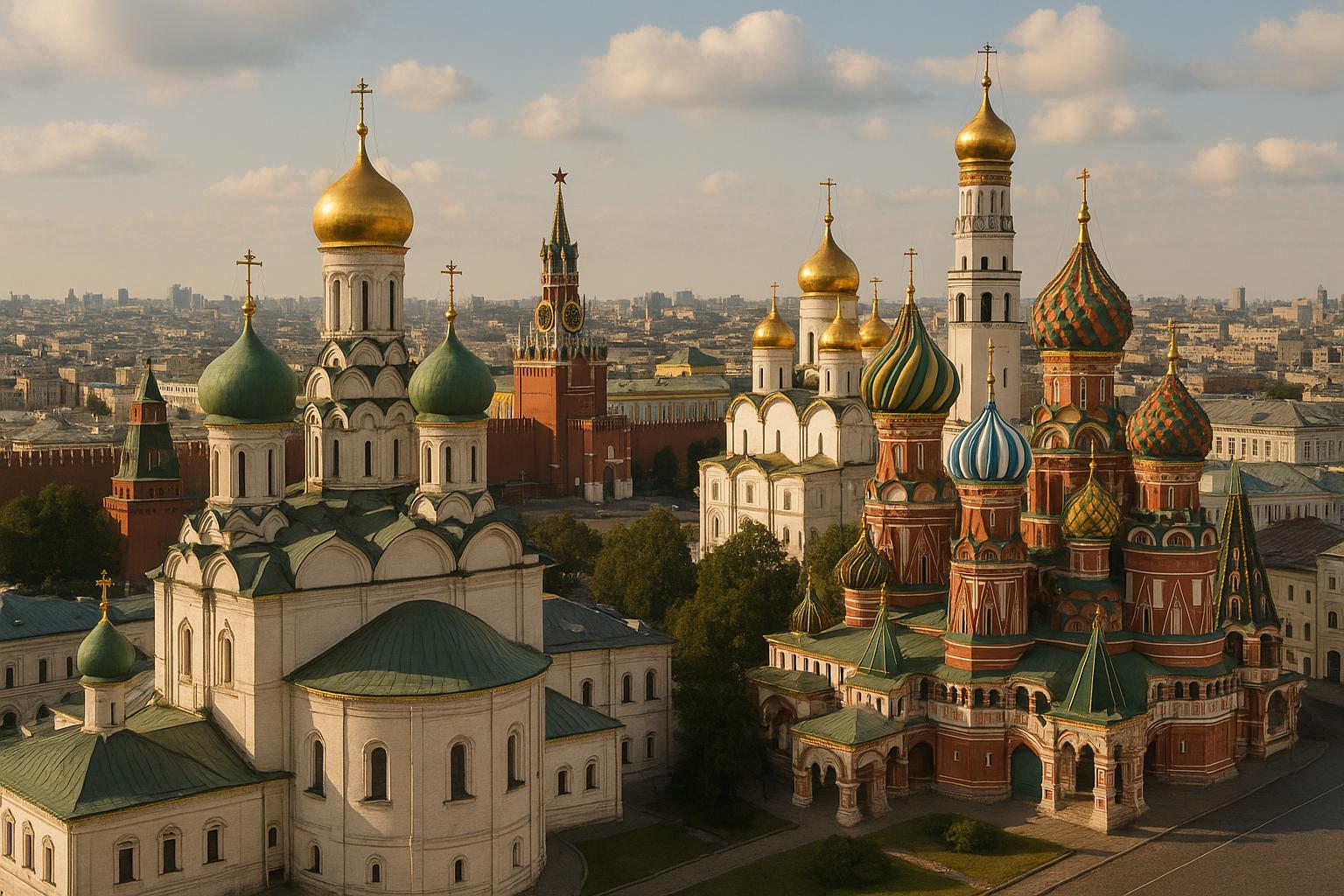
Russian Orthodox architecture is characterized by its distinctive use of domes, often gilded or painted in vibrant colors. The use of “onion domes” is particularly prominent. These domes are not just aesthetically pleasing but also symbolize theological concepts such as the light of Christ. The St. Basil’s Cathedral is a quintessential example, showcasing nine colorful domes that contribute to the iconic imagery of Moscow.
The domes, originating from ancient architectural symbols, are significant for their spiritual implications as well as their artistic value. They are constructed to represent the heavens, offering a visual metaphor for the divine presence. The domes’ ornate detailing and bold colors reflect not only the uniqueness of Russian aesthetics but also a profound spiritual symbolism that defines Orthodox religious architecture. Beyond their beauty, they establish a dialogue between heaven and earth, inviting contemplation and admiration.
The Role of Monasteries
Monasteries have played a crucial role in Moscow’s religious landscape. They served as spiritual, cultural, and educational centers. The Novodevichy Convent, founded in the 16th century, combines religious and secular elements, illustrating the multifaceted nature of religious influence on architecture. More details about its significance can be found on the official Novodevichy Convent site.
These monasteries weren’t merely places of ascetic retreat but hubs of cultural activity where religious fervor blended seamlessly with educational pursuits and artistic expressions. They acted as bastions of knowledge, preserving precious manuscripts and facilitating theological discourse. The Novodevichy Convent, with its exquisite Baroque architecture and storied past, highlights the fusion of sacred devotion and worldly engagement inherent in Moscow’s religious foundations.
Modern Religious Architecture in Moscow
In contemporary times, Moscow continues to build new religious structures, maintaining its legacy of religious architecture while integrating modern design elements. The Cathedral of Christ the Saviour, the tallest Orthodox Christian church in the world, was rebuilt in the 1990s to replicate the original 19th-century structure that was demolished during the Soviet era. This reconstruction symbolizes the enduring impact of religion on Moscow’s urban identity.
The current architectural landscape in Moscow is a juxtaposition of ancient reverence and modern development, where new constructions seek to echo the grandeur of traditional designs while accommodating contemporary sensibilities. The rebuilding of the Cathedral of Christ the Saviour stands as a testament to the resilience of religious faith, enduring despite historical challenges and symbolizing cultural renewal in post-Soviet Russia. This melding of past tradition with contemporary ambition reflects an ongoing dialogue within Russia as it redefines its spiritual and cultural narrative in the modern age.
Preservation and Restoration
Efforts to preserve and restore Moscow’s religious structures are ongoing, reflecting the city’s commitment to maintaining its architectural heritage. Many historical churches have undergone extensive restoration to repair damage from the Soviet period, ensuring that these symbols of religious and cultural significance are preserved for future generations.
Preservation efforts are crucial for safeguarding the city’s formidable legacy of spiritual and architectural wisdom. These undertakings bridge the past with the present, allowing citizens and visitors alike to experience Moscow’s history through its aged yet enduring structures. Restoration projects not only uncover the original splendor hidden beneath wear and neglect but also reinstate the narratives of cultural and spiritual continuity within Moscow’s urban framework. This commitment to heritage conservation highlights a broader societal recognition of the importance of these structures as touchstones of identity and history.
In conclusion, understanding the role of religion in Moscow’s architecture provides insight into the city’s history and cultural identity, where faith and design converge to create a unique urban landscape. By appreciating the nexus between religion and architecture, one can uncover the rich tapestry of influences that have continually shaped and reshaped Moscow’s skyline throughout its centuries of existence. These religious attributions within Moscow’s built environment continue to inspire curiosity and reflection, attesting to the profound historical journey of spiritual and architectural evolution in one of the world’s most iconic cities.