
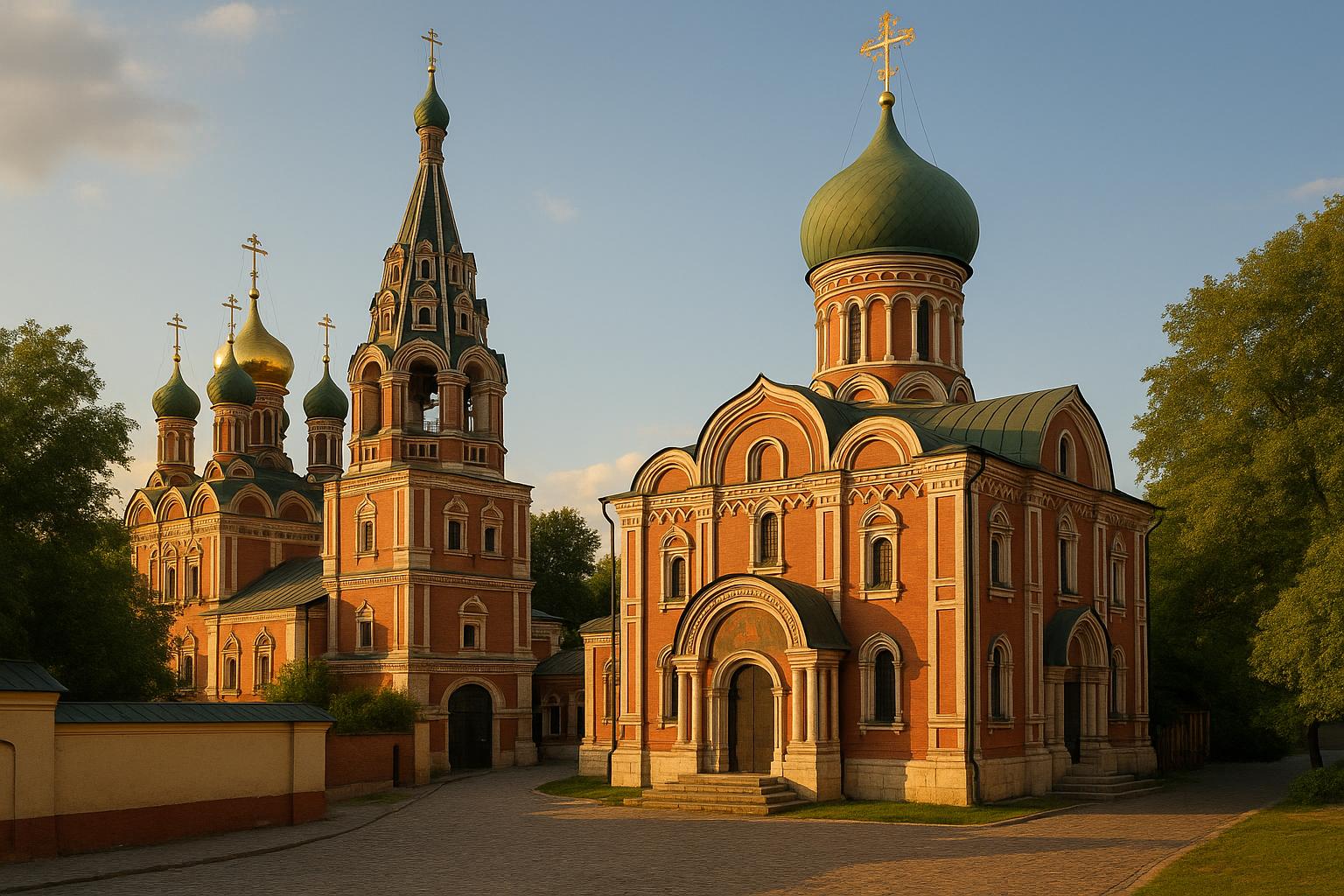
Introduction to Old Believers’ Churches
The Old Believers, a schismatic sect within the Russian Orthodox Church, represent a distinctive branch of religious tradition that emerged in the 17th century. This group, which diverged from the main Russian Orthodox Church, did so primarily to resist the liturgical reforms that were instituted by the then Patriarch Nikon. This resistance manifested itself not only in their religious rituals but also in their cultural and architectural legacies. These churches, particularly prominent within the city of Moscow, stand as enduring monuments to their tenacity and commitment to conserving their unique traditions.
Historical Context
The origins of the Old Believers can be traced back to a schism that occurred due to the rejection of reforms proposed by Patriarch Nikon during the mid-17th century. Nikon’s reforms aimed at standardizing the practices of the Russian Orthodox Church with those of the Greek Orthodox Church. However, many Russian faithful viewed these changes as unnecessary and a deviation from their established traditions. The ensuing schism led to severe persecution, which continued intermittently until the official grant of religious freedom in later years. This period of relative freedom allowed the Old Believers to establish their own distinct places of worship in Moscow, which bear witness to their theological and cultural views.
Architectural Characteristics
The architectural style of Old Believers’ churches embodies the fusion of traditional Russian ecclesiastical architecture with unique attributes that set them apart from mainstream Russian Orthodox constructions. This architectural uniqueness can be observed in several distinct features:
- Iconography: Unlike modern Russian Orthodox churches, Old Believers adhere strictly to pre-reform styles. Their iconography remains untouched by the influences of the reforms and continues to reflect the patterns that were prevalent before Nikon’s time.
- Traditional Motifs: Characteristic of Russian ecclesiastical architecture, these churches often feature iconic elements such as onion-shaped domes. The use of wood, which is a traditional material in Russian architecture, is also prevalent, adding an element of rustic authenticity to their constructions.
- Simplified Forms: The overarching architectural design leans towards simplicity, focusing more on functionality and humility rather than ornate decoration. This pared-down style implies a spiritual purity and dedication to faith without the distractions posed by excessive embellishment.
Notable Old Believers’ Churches in Moscow
One can encounter some of the most remarkable examples of Old Believers’ architectural craftsmanship within Moscow, where these buildings not only serve as places of worship but also as cultural landmarks.
Rogozhsky Settlement Church
Situated within the historic Rogozhsky Settlement, this church complex is acknowledged as a significant spiritual and cultural center for the Old Believer community in Moscow. The Rogozhsky Settlement Church encompasses several buildings that exhibit remarkable craftsmanship. These structures reflect the Old Believers’ dedication to preserving their religious customs in architecture. Visitors frequently admire the richly detailed artworks and elaborate craftsmanship that demonstrate the community’s perseverance in maintaining its unique religious identity.
Church of the Trinity in Kozhevniki
Another key architectural marvel attributed to the Old Believers is the Church of the Trinity in Kozhevniki. This structure epitomizes the architectural elegance of its era, incorporating elements such as ornate frescoes and an iconostasis fashioned in line with ancient iconographic traditions. The church features intricate patterns and vivid colors, embodying the Old Believers’ steadfast commitment to their pre-reform aesthetic and liturgical practices.
Current Role and Influence
In contemporary times, Old Believers’ churches continue to fulfill vital roles within their communities in Moscow. Not only do they provide a venue for religious worship and community gatherings, but they also act as repositories of cultural heritage. The historical and cultural significance of these churches contributes vastly to their influence, attracting those interested in Russian ecclesiastical architecture and the Old Believers’ history.
Moreover, these churches frequently play host to visitors from diverse backgrounds, ranging from those engaged in religious pilgrimage to tourists intrigued by historical architecture. Many interested individuals can delve deeper into this community’s distinct contributions through an array of available resources, which include guided tours and literature documenting their storied past and enduring cultural impact.
For individuals eager to explore the unique architectural contributions of the Old Believers in Moscow, the churches offer a rich portal into the cultural and historical narratives of this distinctive community. As living testaments to their resilient history, these architectural treasures continue to stand prominently, reflecting the values and traditions that have defined the Old Believers for centuries. Through the lens of these emotive structures and in the exploration of their accompanying histories, one can truly appreciate the depth and resilience of the Old Believers’ cultural and architectural impact in Moscow.