
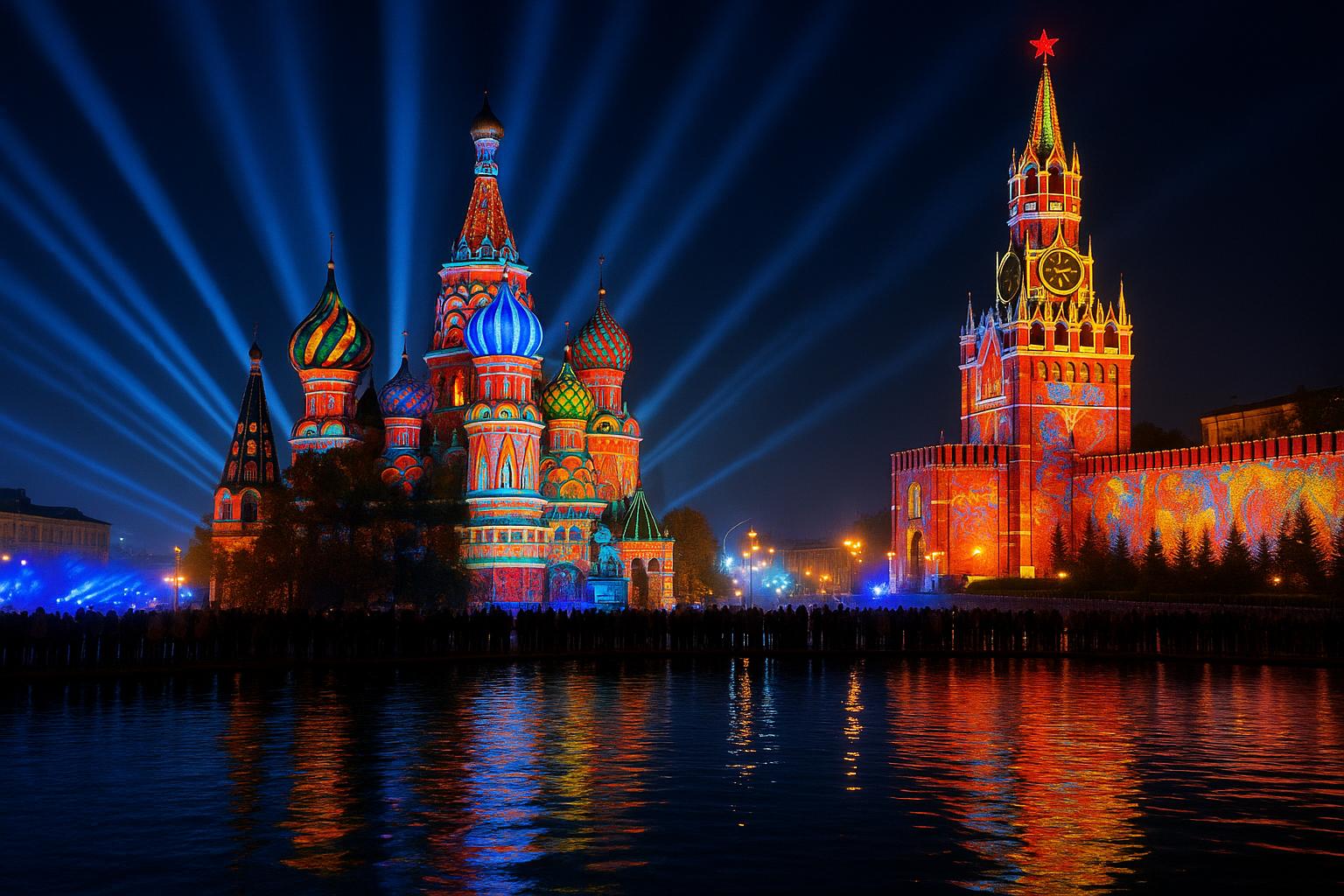
Introduction to the Circle of Light Festival
The Circle of Light Festival annually mesmerizes both residents and tourists in Moscow with its captivating blend of light installations, visual arts, and music. Over several days, Moscow’s urban landscape is transformed, showcasing the extraordinary creativity and technological capabilities of artists and designers. It’s not just a festival; it’s a grand illumination of culture and art, drawing visitors from across the globe to witness the spectacle.
History and Origins
The journey of the Circle of Light Festival began in 2011, initiated by the Moscow City Government. The primary aim was to advance Moscow’s reputation as an international cultural hub and to stimulate global interest in its vibrant arts scene. Since its inception, the festival has undergone significant evolution. It continues to integrate cutting-edge technologies, especially in areas like projection mapping and interactive installations, keeping the festival perpetually fresh and innovative.
Main Features of the Festival
The Circle of Light Festival is renowned for several key attractions that define its uniqueness:
Projection Mapping
At the heart of the festival lies the art of projection mapping. This technique involves projecting light and images onto the facades of Moscow’s iconic buildings, turning them into dynamic canvases. Equipped with high-powered projectors and sophisticated software, artists create immersive animations and stories that captivate onlookers. Each piece is both a technical and creative achievement, redefining the city’s architectural landscape.
Light Installations
Beyond projection mapping, the festival boasts a myriad of light installations across different parts of the city. These installations are a marriage of art and technology, featuring LED lights, lasers, and various electronic components. They often encourage audience interaction, making them both entertaining and engaging for attendees of all ages.
Multimedia Shows
The festival also includes breathtaking multimedia shows that combine light, sound, and occasionally pyrotechnics. These shows are synchronized to music, creating a multi-sensory experience that amplifies the visual impact. The seamless blending of these elements results in performances that are truly unforgettable for their artistic and technical complexity.
Locations and Venues
The event is spread across several prominent venues throughout Moscow, each offering its own distinctive setting and atmosphere. Some of the well-known locations include:
- The Bolshoi Theatre, providing a historic and grandiose backdrop
- Tsaritsyno Park, with its lush landscapes adding a natural dimension
- Sparrow Hills, offering panoramic city views
- The Moscow State University, renowned for its striking architecture
These venues allow for varied artistic presentations, blending the city’s traditional charm with contemporary artistic innovations.
Technology in Use
Innovation is at the core of the festival’s success, with its emphasis on advanced technologies including 3D projection, augmented reality, and interactive installations. These technologies not only enhance the aesthetic appeal but also provide interactive elements that invite participation from the audience. The festival showcases innovations in lighting design and software development, serving as a prestigious platform for demonstrating the cutting edge of technological creativity.
3D Projection
3D projection plays a crucial role in creating the festival’s immersive environments. By projecting three-dimensional images onto architectural structures, artists can create veritable optical illusions that play with depth and perspective. This technology allows buildings to change form and color, creating a visually disruptive experience.
Augmented Reality
Augmented reality (AR) adds an exciting layer to the festival, providing an interactive experience that extends beyond physical installations. With the use of smartphones or tablets, attendees can see additional content overlaid onto their real-world surroundings, blurring the lines between reality and imagination. This technology enhances engagement, offering a personalized artistic experience.
Interactive Elements
Interactive art installations are a significant draw at the festival, inviting direct engagement from visitors. This could be in the form of installations responding to sound and movement, or digital components that change visual effects based on audience interaction. These innovative features not only entertain but also educate attendees on the possibilities of modern technology in art.
Conclusion
The Circle of Light Festival exemplifies the synergy between art and technology, creating a platform that promotes community engagement and cultural enrichment. Its transformation of urban spaces into vibrant art pieces attests to its success as both an aesthetic and technological endeavor. To explore the festival further and keep abreast of upcoming events, you can visit the official website of the Circle of Light Festival. As the festival continues to grow and evolve, it remains a testament to the dynamic relationship between technology and art in creating public enjoyment and cultural celebration.